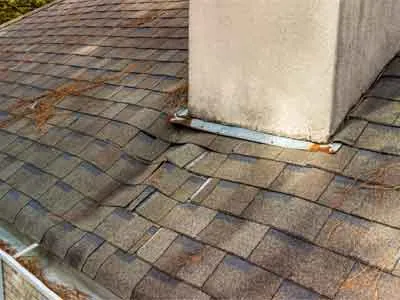
Roof flashing leak repair is the process of finding where water is entering at a flashing joint and correcting that specific failure. It starts with tracing the leak path, which may be several feet from the stain, and ends with a targeted repair or replacement. It is the diagnostic core of Folsom roof flashing repair.
What roof flashing leak repair involves
Water rarely drips directly below the hole. It runs along rafters, decking and ductwork before showing up as a ceiling stain. That is why guessing and caulking the nearest joint often fails. A proper leak repair starts with a pattern: where is the stain, did it appear in wind-driven rain, and is it near a chimney, wall, vent or valley?
Providers use attic inspections, moisture checks and sometimes controlled water testing, section by section, to isolate the source. When flashing is the cause, the repair depends on the detail: step flashing, pipe boots, skylight flashing or other pieces. Once the source is confirmed, the repair is targeted and often much smaller than people fear.
Common problems this repair solves
- Leaks traced to the wrong location because water traveled
- Sealant patches over unrelated joints
- Multiple small flashing failures contributing to one stain
- Condensation mistaken for a roof leak
- Damaged decking that hides the real entry point
Signs you may need roof flashing leak repair
- Ceiling stains that grow after rain
- Stains that appear near a chimney, vent, skylight or wall
- Wet insulation or darkened decking in the attic
- Musty odor or mold in a room under the roof
- Leaks that return after a patch
How the repair process works
- Gather the clues. The provider asks where and when it leaks, and reviews rain patterns and previous repairs.
- Inspect attic and roof. Stains, moisture and framing are checked from inside, followed by the roof surface and flashing details.
- Confirm the source. Controlled water testing or close inspection narrows the entry point.
- Repair and verify. The failed detail is repaired or replaced and the area is checked during the next rain.
What a good repair achieves
- Fixes the real cause instead of covering symptoms
- Reduces hidden moisture damage
- Saves money on repeat repairs
How a roofer traces a leak, step by step
Finding a leak is detective work, and a good roofer follows a sequence rather than guessing.
- Interview: where is the stain, when did it start, does it follow wind or heavy rain, and what repairs have been done
- Attic inspection: follow the stain upward along rafters and decking, looking for wet insulation, dark streaks, rusted nails and daylight
- Roof inspection: check every penetration and joint above the stain, plus a few feet to either side, since water travels downhill and sideways
- Moisture check: a meter or thermal camera can reveal damp areas that are not yet visible
- Controlled water test: if the source is still unclear, water is applied in stages, low to high, with someone watching inside, to find exactly where it enters
Leak look-alikes: when it is not the roof
Several non-roof problems mimic a flashing leak. A leaking supply or drain line can stain a ceiling in dry weather. HVAC condensate lines and a clogged drain pan can drip near an air handler. High humidity and poor insulation can cause condensation on cold surfaces, especially around vents and in cold weather. A failing exhaust duct that dumps warm moist air into a cold attic can wet the roof deck from below.
Rule of thumb: if the stain appears only after rain, the roof is the prime suspect. If it appears on dry days, think plumbing, HVAC or humidity. A roofer who offers a leak inspection should also tell you if the problem is outside their trade.
After the repair: dry-out and follow-up
Fixing the entry point is only half of the job. Wet insulation loses its value and can grow mold, and wet drywall can stain or sag. Ask the roofer whether any insulation or decking needs replacing, and arrange for the interior to be dried before it is closed up or painted over.
Then watch the first two or three rains. Mark the edges of the old stain lightly with a pencil and date it, so you can tell whether it is growing. If it comes back, call the roofer who did the repair promptly, since many repair warranties require notice within a certain time. For emergency situations, see emergency roof flashing repair.
Roof Flashing Leak Repair in Folsom: local considerations
Folsom's long dry season can hide slow flashing leaks until the first soaking rain. Neighborhoods across the city, from Central District to The Parkway, see the same pattern after the first big storm of fall or winter.
If the leak is active and heavy, see emergency roof flashing repair. You can also browse our full Folsom flashing services.
Cost considerations
Leak repair cost depends on how hard the source is to find, how many details are involved, roof access and whether decking or insulation needs repair. Simple fixes at a boot are small; multiple failures take longer. Prices vary by job.
Resist a quote that is only 'seal it'. A written scope should name the failed detail and the method of repair.
When to call a professional
Call a professional once you see a stain, because the damage inside walls and attics grows quietly. Searching for leaks on a pitched roof is also a fall risk.
Roof Flashing Leak Repair FAQs
Why does my roof leak far from the stain?
Water follows rafters, decking and pipes before dripping, so the entry point can be several feet away.
Is a leak always the flashing?
No. Shingles, vents and condensation can also be causes. A provider should confirm before repairing.
Will the leak stop right away?
A correct repair should stop it, but confirm during the next rain and report any recurrence.