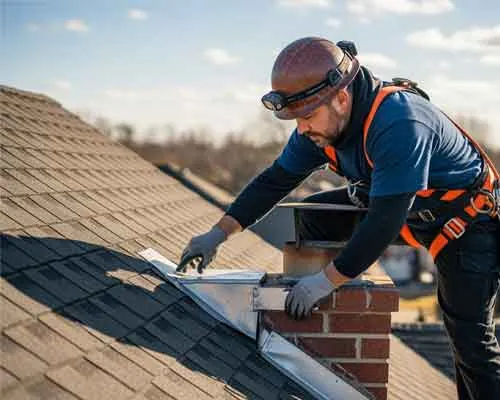
Chimney Flashing Repair
Fix leaks where the roof meets brick, stone or stucco chimneys: base, step and counter flashing.
Leaks at chimneys, valleys, skylights, vents and walls usually start at the flashing. Call now and we will connect you with a local roofing provider who repairs it.
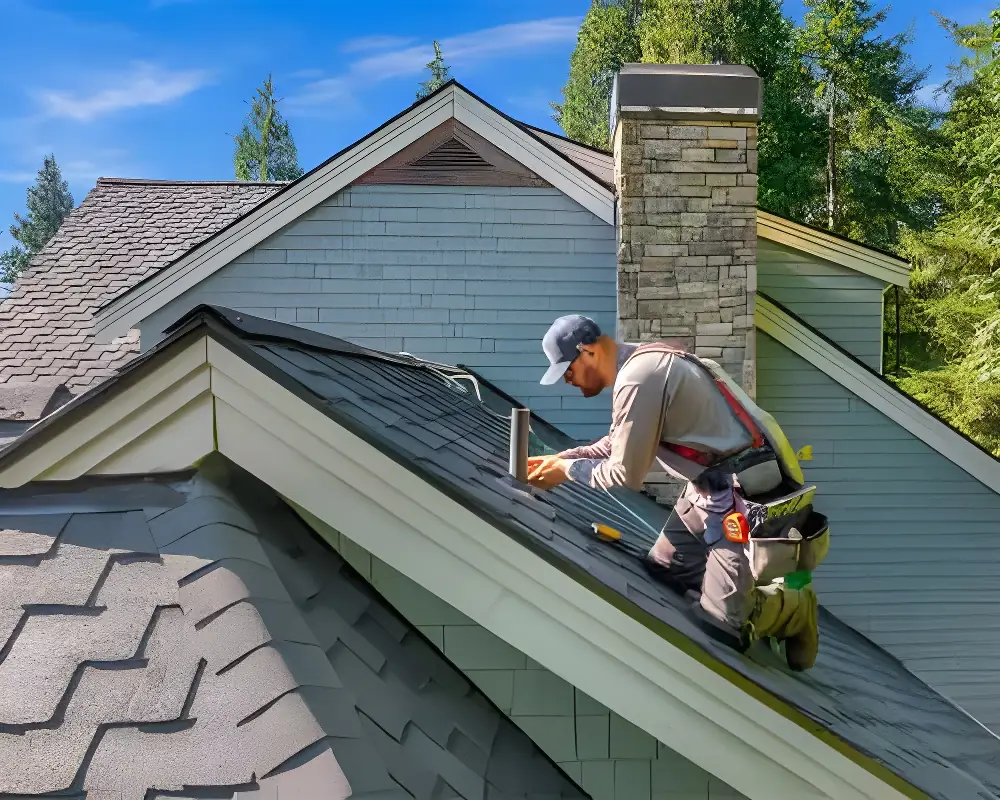
Roof flashing repair fixes the thin metal pieces that seal the joints of a roof, such as around chimneys, skylights, vents, valleys and walls. When flashing cracks, rusts or lifts, rain gets under the roof covering. Call FlashGuard Roofing, describe the problem, and we will get you to a local roofing professional in Folsom, CA who handles that kind of repair.
Shingles and tiles shed water on open roof surfaces. Flashing handles the places where the roof is interrupted or changes direction: where it meets a chimney, wall, dormer or skylight, where two slopes join in a valley, and where pipes and vents pass through. These joints take the most water and movement, which is why most roof leaks begin there rather than in the middle of a shingle field.
Flashing fails in predictable ways. Sealant dries and shrinks in the heat, metal rusts, fasteners back out, and pieces that were never lapped correctly let water slip behind them. Heavy rain, wind and falling debris can also lift or bend metal. A correct repair addresses the failed joint itself, not just the stain on your ceiling.
Homeowners usually call when they see a ceiling stain after rain, water near a fireplace, a drip beside a skylight or damp paint on an exterior wall. Others call after a storm, because bent or lifted flashing is easy to miss from the ground. Some call as a precaution, since Folsom's long dry summer can hide slow leaks until the first soaking rain.
A stain near a fireplace often means chimney flashing repair. A line of stains along an exterior wall may point to step flashing or a missing kick-out. A drip below a bathroom suggests a cracked pipe boot. If water is coming in right now, go straight to emergency roof flashing repair.
Different parts of the roof use different flashing, and each fails in its own way. This table is a starting point; a provider confirms the real source on site.
| Flashing type | Where it sits | Typical failure |
|---|---|---|
| Chimney Flashing Repair | Where a chimney passes through the roof | Sealant failure, rusted base metal, loose counter flashing |
| Roof Valley Flashing Repair | Where two roof slopes meet | Rust-through, debris dams, poor shingle overlap |
| Skylight Flashing Repair | Around skylight frames | Mismatched kits, dried sealant, short saddle |
| Step Flashing Repair | Along sloped roof-to-wall joints | Corrosion hidden behind siding, nails used instead of laps |
| Pipe Boot Flashing Repair | Around plumbing vent pipes | Cracked or shrunken rubber collar |
| Drip Edge Flashing Repair | Along eaves and rakes | Missing, bent or displaced metal, rotted fascia |
Browse the full leak repair guide or see all flashing services side by side. Each service below has its own page explaining the problem, the repair process and what to ask a provider. Use the leak repair page if you are unsure where the water is entering.
Fix leaks where the roof meets brick, stone or stucco chimneys: base, step and counter flashing.
Repair the metal channel where two roof slopes meet and carry the most water.
Stop leaks around skylight frames by repairing head, side and sill flashing.
Re-set the stepped metal pieces that seal shingles against walls, dormers and chimneys.
Repair or replace cracked rubber collars around plumbing vent pipes that leak.
Seal the joints where roofs meet walls, including kick-out and headwall details.
Fix leaks at trims, penetrations and seams on standing seam and corrugated metal roofs.
Active leak or storm damage? Call now to reach a local provider and get temporary protection.
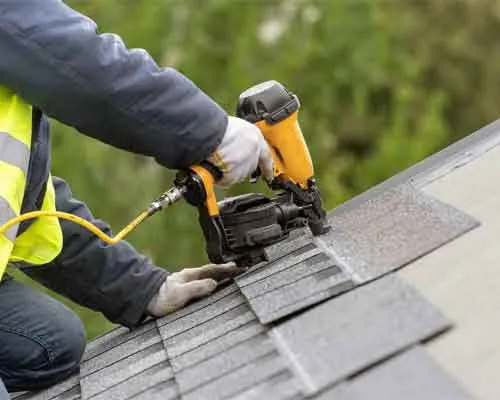
Replace worn-out flashing across the roof when patching no longer holds.
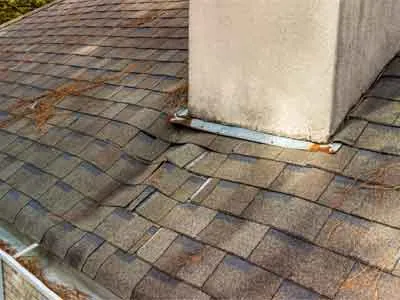
Trace and fix leaks that start at flashing joints, not at the shingle field.
Re-set the cap metal that covers base flashing at chimneys, walls and parapets.
Fix the single-piece flashing at the lower edge of walls, chimneys and dormer fronts.
Repair or install the metal edge that guides water into gutters and protects fascia.
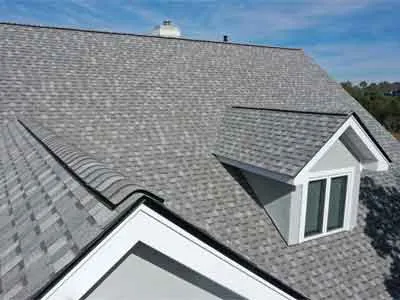
Seal the multiple joints around dormers: cheeks, front apron and valleys.
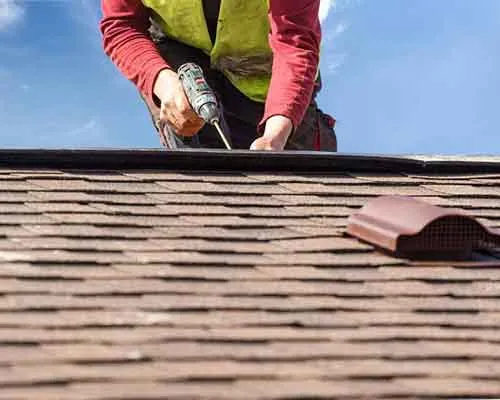
Replace flashing around exhaust vents, furnace flues, attic vents and roof jacks.
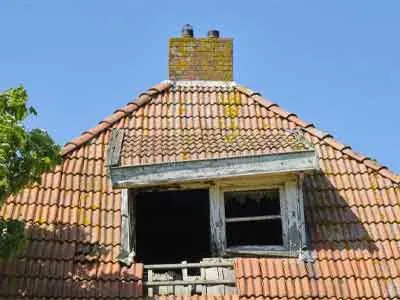
Repair flashing lifted, bent or torn by wind, falling limbs and heavy rain.
Most calls fall into a handful of patterns. Recognizing yours helps you describe the problem clearly when you call.
Finding a roofer who does small, targeted repairs, and who can come out for a leak, takes time when you are stressed and water is coming in. One call shortens that search: we get you to a local roofer who handles flashing work in your part of Folsom.
Calling about a leak should be simple. Here is exactly what happens when you call our Folsom roof flashing repair line.
Flashing work is detail work, so we match your call to a local roofing professional who handles the specific repair you describe, whether that is a chimney, a valley, a skylight or a wall joint. Before you agree to anything, ask for their California contractor license number and look it up on the state licensing board website. Roofing work in California is licensed under the C-39 classification.
We take calls from homeowners throughout Folsom, including ZIP codes 95630 and 95763. Each neighborhood has its own mix of roof ages and designs. Older areas such as Historic Folsom and Central District often have roofs with several layers of past repairs. The City of Folsom notes that Natoma Station, Prairie Oaks and Broadstone were largely developed in the 1990s, so their original flashing details are now decades old.
In the southeast, Empire Ranch and The Parkway include larger homes and tree-lined open space where debris is a concern. Newer areas such as Folsom Ranch and Parkshore raise warranty questions. Around Lexington Drive, Briggs Ranch, Lexington Hills and Willow Springs each have their own page, and on the north side American River Canyon and American River Canyon North deal with canyon-edge trees and storms.
See the full Folsom service areas guide for how each neighborhood differs. If your street is not listed, call anyway. We will confirm whether we can connect you with a provider in your part of the area, and our Folsom roof flashing repair service covers the whole city.
Folsom has long, hot, dry summers and cool, rainy winters. Heat bakes sealant and rubber, and dry months let small gaps go unnoticed. When the first heavy rain arrives, those gaps show up as stains. Thermal movement also loosens fasteners and trim over time.
A practical schedule is to have flashing checked in late summer or early fall, before the rainy season, and again after any major storm. Clear debris from valleys and chimney backs only if you can do so safely from the ground; otherwise ask a provider. For storm-related concerns see storm damaged roof flashing repair.
We do not publish fixed prices, because the cost depends on the job. The main factors are which flashing is involved, how much of it is damaged, roof pitch and access, roof material, and whether decking, siding or masonry also needs repair. A resealing job and a full flashing replacement are very different in scope.
Ask for a written scope that names each flashing location and the materials. Be wary of any quote that is only 'seal it with caulk'. California also limits down payments on most home-improvement contracts, so be cautious of large deposits requested up front.
Roof flashing is thin metal installed at roof joints and penetrations, such as chimneys, valleys, skylights, vents and walls, to direct water away from the joint.
Common signs are ceiling stains near a chimney, wall, vent or skylight, rust or lifted metal at roof joints, and leaks that appear in heavy or wind-driven rain.
We get you to a local roofing professional who handles your type of flashing problem. They inspect the roof, explain what is failing and give you a written scope and price before any work starts.
It depends on the type and extent of the damage, roof access and materials. Each provider sets their own prices, so ask for a written scope before agreeing to work.
Caulk is a temporary stopgap. It dries and cracks, and it does not fix rusted, bent or incorrectly lapped metal.
Ask for the license number and look it up on the California Contractors State License Board website. Roofing work requires a C-39 roofing license or an appropriate general building license.
Protect belongings, catch drips, photograph damage and stay off the roof. Call us and tell us it is an active leak so we can ask about urgent availability.
We take calls across Folsom, including ZIP codes 95630 and 95763, and have pages for 14 neighborhoods from Historic Folsom to Folsom Ranch.
Tell us what you are seeing and where in Folsom you are. We will connect you with a local roofing provider.
Call Now (916) 937-0225